
Manufacturing is moving towards production environments where machines, people, materials and data collaborate with less interruptions. This change is driven by machine tool automation, linking CNC equipment with robotic handling, digital controls, sensors and automated workflows. The end result is a production floor that minimises repetitive manual work and enhances consistency, equipment utilisation and visibility into day-to-day operations.
The difference is particularly noticeable in machining environments. Where loading parts, transferring material, monitoring cycles and repeating production steps can take a lot of time. Automation allows manufacturers to rethink these activities as connected processes.
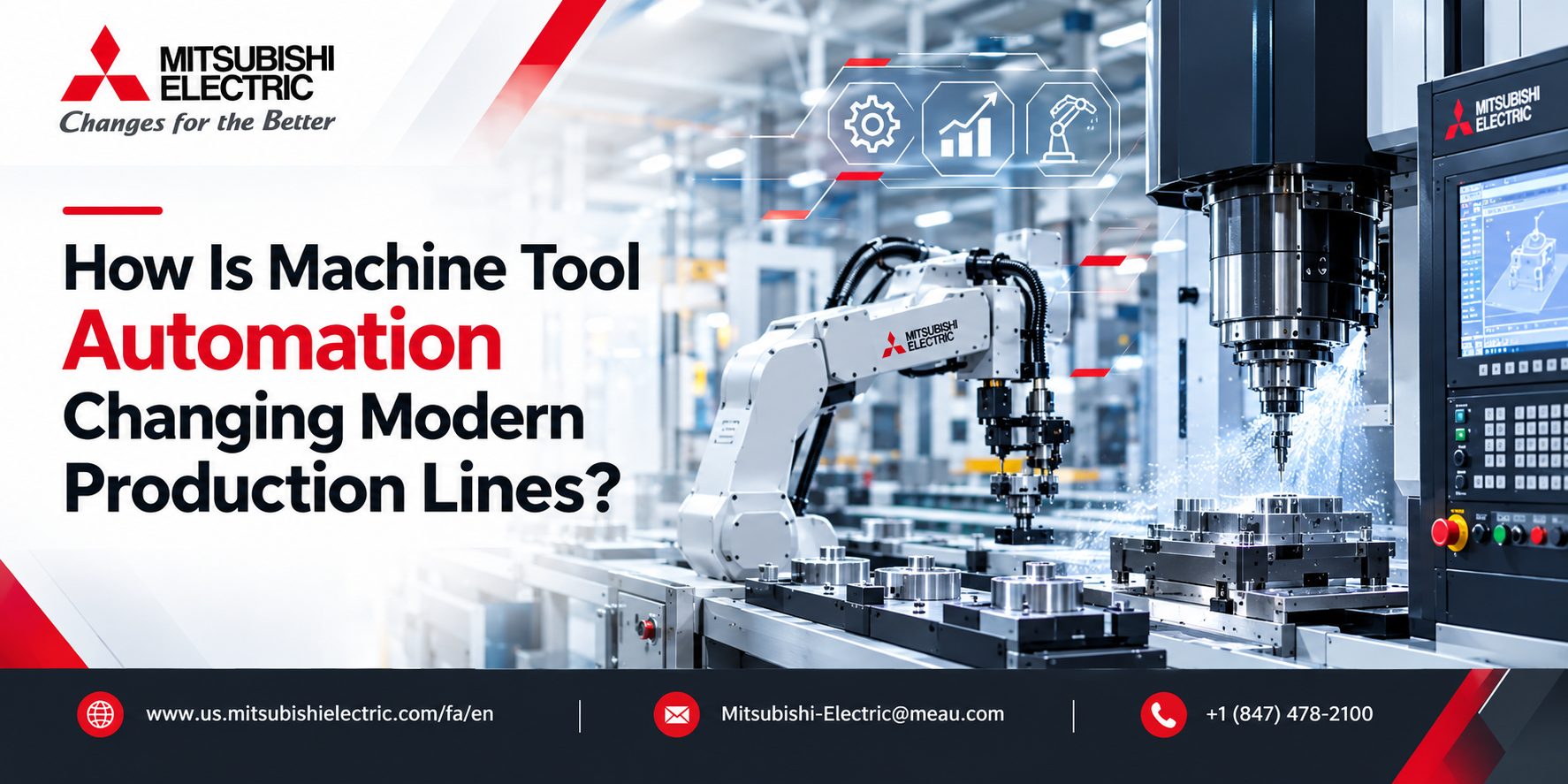
How Automation Is Changing the Role of the Machine Tool
In a traditional machining cell, an operator might be heavily involved in loading a workpiece, starting a cycle, taking out the finished part, and getting the machine ready for the next operation. That approach can work well for certain production requirements, but repetitive handling can also put a cap on how continuously equipment operates.
With machine tool automation, robotic tending and automated controls can assume predictable movements around the machining process. This enables equipment to run with less manual interruption, as employees spend more time on setup, inspection, programming, troubleshooting and process improvement.
The production cell becomes more connected
An automated machining cell can bring several technologies together, including:
- CNC machine controls
- Industrial robots
- Sensors and safety systems
- Servo and drive technology
- Operator interfaces
- Production monitoring tools
- Industrial communication networks
Connecting these components allows information and instructions to move between different parts of the production process. That can make it easier to identify delays, monitor equipment, and maintain a consistent workflow.
Why Machine Utilization Matters More Than Ever
A machine can have a lot of production capacity that is not used due to manual loading, unloading, set-up delays, or breaks between cycles. It may not take more equipment to buy to increase utilisation. It can also mean the better operation of existing machinery.
Automated tending can supply machines with workpieces and reduce idle times. Automating repetitive loading and unloading enables operators to run multiple activities or focus on areas where judgement and technical expertise are needed.
Automation changes where human effort is spent
The goal is not simply to remove people from the process. A more productive arrangement can shift human effort toward areas where experience matters most.
Employees may spend more time on:
- Quality verification
- Tool management
- Programming
- Preventive maintenance
- Production planning
- Troubleshooting
- Process optimization
This can make automation valuable from both a productivity and workforce-utilization perspective.
Why Fixtures Matter in an Automated Cell
Reliable automation depends on repeatable positioning. A robot needs to pick up and place components consistently, while the machine needs each workpiece positioned accurately for the machining operation.
That makes machine tool fixtures an important part of the overall system. A fixture needs to hold the component securely while providing sufficient access for tools and automated handling equipment.
Workholding affects repeatability
Fixture design may need to consider:
- Part geometry
- Clamping force
- Robot access
- Tool clearance
- Chip removal
- Changeover time
- Production volume
A fixture that works adequately in a manual environment may require modification when a process becomes automated. The objective is to create a predictable relationship between the robot, workpiece, machine, and cutting tools.
Material Movement Can Become the Next Bottleneck
Automating one machining operation does not automatically create an automated production line. Parts still have to arrive at the right workstation at the right time.
This is where material handling automation can become important. Automated conveyors, guided vehicles, storage systems, robotic transfer equipment, and other technologies can reduce the amount of manual movement between production stages.
If machining becomes highly automated while material transfer remains dependent on constant manual intervention, the constraint may simply shift to another part of the facility.
Connecting production stages
A coordinated workflow might move raw components into a machining cell, transfer completed parts toward inspection, and route approved components to another operation.
This type of connected movement can reduce unnecessary handling and provide a clearer picture of where materials are within the production process.
Data Is Giving Manufacturers Better Visibility
Automation also changes how manufacturers understand their equipment. Modern production systems can collect information about machine status, cycle activity, downtime, alarms, and other operating conditions.
That information can help production teams identify patterns that may be difficult to see through manual observation alone.
Building a More Connected Production Environment
The long-term direction of manufacturing automation is moving toward greater coordination between equipment, people, materials, and information. CNC machines, robots, fixtures, sensors, controls and software can operate as members of a larger production architecture.
Thus manufacturers can see machine tool automation as more than simply upgrading equipment. It can be part of a strategy for increasing machine utilisation, reducing repetitive work, creating more predictable processes, and making production information easier to use.
FAQs
What is machine tool automation?
It involves using technologies such as CNC controls, robots, sensors, automated handling equipment, and software to reduce manual intervention around machining processes and coordinate production activities.
Why are fixtures important in automated machining?
Fixtures provide consistent workpiece positioning and secure clamping. They also need to provide appropriate access for robots and cutting tools, making fixture design an important part of an automated machining cell.
Can automation improve the use of existing machines?
Yes. Automated loading, unloading, material transfer, and monitoring can reduce certain sources of idle time and allow existing equipment to be used more consistently.
Conclusion
Manufacturing automation is changing production lines by connecting tasks that were once handled separately. Machine tending, workholding, material movement, equipment monitoring, and production data can now be considered as parts of one coordinated workflow.
The real measure of the impact of machine tool automation is how well the technology solves a real production constraint. When manufacturers assess their processes first and then build automation around those needs, they can create production environments that are more consistent, connected and adaptable.